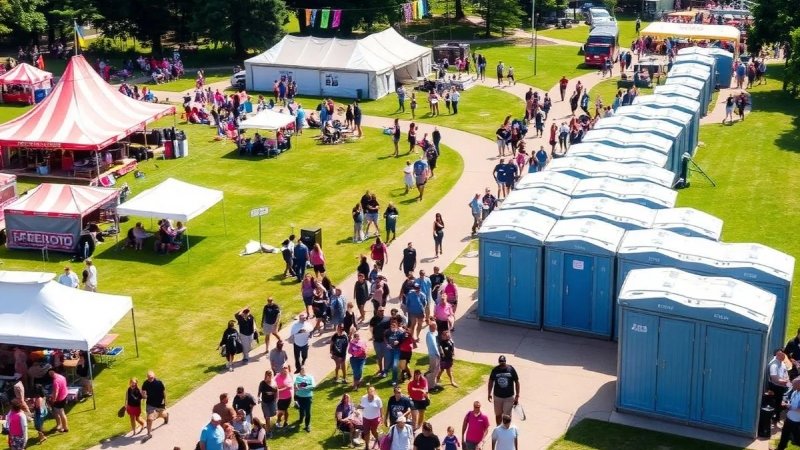
Food truck festivals and community markets depend on steady foot traffic, comfortable gathering areas, and a layout that keeps people moving easily between vendors. Guests may arrive hungry, stay for several hours, bring children, shop at booths, listen to live music, sit at picnic tables, and return to food or drink lines more than once. With that much activity centered around eating, drinking, and walking, portable restroom planning needs to be handled early.
For event managers, restroom access affects the way guests experience the entire market. If facilities are hard to find, placed too far from food areas, or not serviced properly, the event can feel poorly organized even when the vendors and entertainment are strong. A practical sanitation plan keeps guests comfortable, supports vendors, and helps the event site stay cleaner from setup through closing.
Start With the Event Footprint
Before deciding where restrooms should go, managers should review the full event layout. Food truck festivals and markets often include truck rows, vendor tents, seating areas, entertainment spaces, drink stations, parking, entrances, ticketing, information booths, and service zones.
Restrooms should be placed according to how guests will actually move through the event. A small market in one parking lot may only need one visible restroom area. A larger festival spread across a park, downtown block, fairground, or waterfront may need multiple restroom clusters.
The layout should also account for crowd flow. Restroom lines should not block food truck ordering windows, vendor tables, sidewalks, emergency routes, or main walking paths.
Place Restrooms Near Food Areas Without Crowding Them
Food and beverage service creates consistent restroom demand. Guests may eat full meals, sample several trucks, drink coffee, lemonade, beer where allowed, bottled water, or specialty drinks. Restrooms should be close enough that guests do not have to leave the festival area, but not so close that lines or odors affect dining.
A good placement is often near the edge of the main food zone, close to a walking path or seating area but separated from ordering lines. This keeps facilities convenient while protecting the atmosphere around the trucks and tables.
When planning porta john rental for a food truck festival or community market, managers should consider restrooms, handwashing stations, trash areas, vendor access, and guest seating together. These services need to support each other without competing for the same space.
Support Entrances and Arrival Points
Restroom demand often begins as soon as guests arrive. Families may drive in from nearby towns, children may need facilities right away, and shoppers may stop before entering the vendor area. Placing restrooms near entrances, parking paths, or ticketing zones can help manage that early demand.
These units should be easy to see without blocking the first impression of the event. Guests should not walk directly into restroom lines as soon as they arrive, but they should be able to find facilities quickly.
Departure areas also matter. Guests may look for restrooms before leaving, especially after eating, drinking, or waiting through an evening entertainment schedule. Keeping facilities available and accessible through the end of the event improves the closing experience.
Plan for Families and Children
Food truck festivals and community markets often attract families. Parents may be managing strollers, young children, snacks, drinks, shopping bags, and seating all at the same time. Restroom access should be close enough to family activity areas that parents do not have to cross the entire event site.
If the event includes a kids’ zone, playground, craft table, petting area, bounce house, or games, restroom placement nearby becomes more important. Handwashing or hand-sanitizing stations can also be helpful in these areas because children are likely to handle food, toys, grass, tables, and shared activity supplies.
Family-friendly events feel more organized when basic needs are easy to manage.
Include Accessible Units in Practical Locations
Accessible restrooms should be placed where guests can actually reach them. A unit on the far edge of a grass field may not be helpful if the route is muddy, sloped, crowded, or blocked by vendor tents.
Managers should think about guests using wheelchairs, walkers, scooters, canes, or strollers. Accessible units should be near firm, level surfaces when possible and connected to practical routes from parking, entrances, seating, food areas, and vendor rows.
Accessible restroom planning should not be treated as an extra detail. It should be part of the main layout from the beginning.
Keep Vendor and Staff Needs in Mind
Vendors, food truck operators, volunteers, security, cleanup crews, musicians, and event staff may be on-site long before guests arrive and long after they leave. They need restroom access too.
Staff-focused placement may include units near vendor check-in, volunteer tents, backstage areas, market management stations, or food truck support zones. These should not interfere with guest areas, but they should be close enough that workers do not have to abandon their posts for long periods.
Supporting staff needs helps the event run smoothly. A vendor who has to walk across the entire market for a restroom break may lose service time during a busy rush.
Protect Food Truck Service Lanes
Food truck festivals need clear lanes for trucks, supply vehicles, fire access, vendor loading, and end-of-day departure. Restrooms should never be placed where they block truck movement or make it harder for vendors to set up.
Managers should review how trucks will enter, park, serve, restock, and leave. A restroom location that looks open before setup may become a problem once trucks, generators, supply tables, tents, and customer lines are in place.
Service lanes should also remain open for sanitation crews if the event is long enough to require restroom maintenance during the day.
Add Handwashing and Sanitizing Stations
Because these events revolve around food, hand hygiene matters. Handwashing or sanitizing stations should be placed near restroom areas and close to food zones where practical. They are also useful near kids’ activities, picnic tables, and vendor rows.
These stations should be visible and easy to access without forcing guests into restroom lines just to clean their hands. If the event includes messy foods, samples, crafts, animals, or outdoor seating, extra hand hygiene access can make the event feel cleaner and more guest-friendly.
Managers should also check supplies throughout the event. Empty stations create frustration quickly.
Prepare for Peak Demand Times
Food truck festivals and markets usually have predictable surges. Restroom use may rise after lunch, during dinner hours, between entertainment sets, after contests, near closing, or during breaks in the weather.
Managers should plan capacity and placement around these high-use windows. If all facilities are placed in one area, lines may grow even while other parts of the site remain underused. Multiple smaller clusters can help spread demand.
Events with alcohol service, long operating hours, or large seating areas may need more careful planning because guests tend to stay longer.
Account for Weather and Ground Conditions
Outdoor markets and festivals are exposed to sun, heat, wind, rain, mud, and uneven surfaces. Restrooms should be placed on stable, level ground. Avoid low areas where water collects or soft ground where foot traffic may create mud.
If the event continues after dark, lighting should be considered along restroom routes. Guests should be able to find facilities without walking through poorly lit corners, vendor storage areas, or uneven fields.
Weather also affects signs, lines, and servicing. Lightweight signs and barriers should be secured, and restroom areas should be monitored if conditions change.
Use Clear Signage and Maps
Guests should not have to ask vendors where the restrooms are. Signs should be visible from entrances, seating areas, food truck rows, vendor markets, and entertainment spaces. For larger events, restroom locations should also appear on printed maps, event websites, social media graphics, or mobile guides.
Good signage spreads restroom demand and keeps guests moving comfortably through the site. It also reduces interruptions for vendors and staff.
Review the Setup Before Opening
Before guests arrive, managers should walk the site from the parking area or main entrance through the food trucks, vendor rows, seating area, activities, and restrooms. This helps reveal blocked views, awkward routes, poor signage, tight lines, or service-access problems.
A final check should confirm that units are stable, stocked, visible, and placed away from food service conflicts. It should also confirm that delivery vehicles, vendor lanes, and emergency paths remain clear.
Portable restroom planning for food truck festivals and community markets should support food service, guest comfort, vendor operations, accessibility, and crowd flow. Restrooms need to be convenient, but they also need to stay clear of ordering lines, service lanes, seating areas, and vendor setups. Visit my website for more details.
By mapping the site early, placing units near real activity zones, planning for families and staff, adding hand hygiene stations, and reviewing conditions before opening, managers can create a cleaner and more comfortable event. A thoughtful sanitation plan helps guests stay longer, vendors operate better, and the entire market feel more professionally managed.