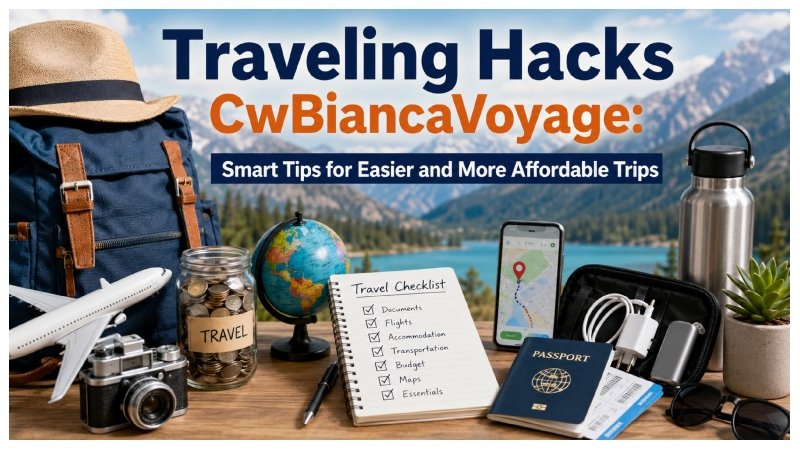
Travel can be exciting, but poor planning can quickly turn a good trip into a stressful experience. Expensive bookings, heavy luggage, confusing transportation, and unexpected problems can affect the entire journey. Traveling Hacks CwBiancaVoyage focuses on practical ways to make travel simpler, more organized, and easier to manage. The key is not to plan every minute of a trip. Instead, prepare for the situations that commonly cause delays, extra costs, or unnecessary stress.
Plan Your Trip Before You Leave
Good preparation can prevent many common travel problems. Start by checking your destination, travel dates, weather, transportation options, and local requirements.
Create one digital folder for your important documents. Keep copies of your passport, identification, hotel booking, flight details, travel insurance, and emergency contacts. Store them securely so you can access them if your physical documents become unavailable.
It also helps to download important information before leaving home. Offline maps, translation tools, airline apps, hotel details, and transportation apps can remain useful when mobile data is unavailable.
Build a Flexible Itinerary
Avoid filling every hour with activities. A realistic itinerary gives you enough time to travel between locations, rest, and handle unexpected delays.
Choose a few priority attractions for each day and leave some free time. This approach gives you structure without making the trip exhausting.
Pack Less and Pack Smarter
Overpacking creates problems from the beginning of a trip. A heavier suitcase can mean higher baggage fees, slower airport movement, and more effort when changing hotels.
Choose clothing that works for multiple occasions. Neutral colors and versatile layers can reduce the number of items you need.
Packing cubes can also separate clothes, electronics, and personal items. Keep important documents, medications, chargers, and other essentials in your carry-on rather than checked luggage.
Before closing your suitcase, remove anything you probably will not use. A simple question helps: Would I actually need this during the trip?
Save Money Without Making Travel Difficult
A lower travel budget does not require sacrificing every comfort. It requires knowing where your money is going.
Compare flights and accommodation before booking. Check the complete price instead of focusing only on the advertised rate. Baggage charges, transportation costs, taxes, and other fees can change the final amount considerably.
Traveling during less busy periods can also reduce costs. However, compare the total trip price rather than looking only at the flight fare. A cheaper flight at an inconvenient airport may create expensive transportation costs later.
For food, consider mixing restaurants with local markets, cafés, or simple meals. You can enjoy local cuisine without eating at expensive tourist-focused locations every day.
Choose Accommodation by Location, Not Just Price
The cheapest hotel is not always the cheapest option overall.
A property far from the places you want to visit may require daily spending on taxis or public transportation. Before booking, check its location, transport connections, guest reviews, and additional charges.
Read recent reviews carefully. Look for repeated comments about cleanliness, noise, safety, internet access, and the actual condition of the property.
This small amount of research can prevent an uncomfortable stay.
Make Transportation Easier
Transportation becomes much easier when you understand your options before arriving.
Research the airport-to-city route in advance. Check whether public transportation, airport shuttles, taxis, or ride-hailing services are available.
Download offline maps before leaving Wi-Fi. Save your accommodation address in your phone and keep a written copy as a backup.
When public transportation is reliable, it can also save money and provide a better way to experience the destination.
Keep a Small Travel Essentials Kit
A compact essentials pouch can solve many small problems during a journey.
Consider keeping items such as:
- Charging cable and power bank
- Universal travel adapter
- Earphones
- Tissues and hand sanitizer
- Refillable water bottle
- Basic personal-care items
- Pen for travel forms
- Copies of important documents
Keep this pouch somewhere easy to reach. There is little benefit in having an important item buried under your clothes when you need it quickly.
Stay Safe While Exploring
Travel safety starts with awareness rather than fear.
Research common local scams before visiting a destination. Avoid displaying large amounts of cash or expensive electronics unnecessarily. Keep valuable items secure and be particularly careful in crowded transport areas.
Share your basic itinerary with someone you trust, especially when traveling alone. If you plan an activity in a remote area, let someone know where you are going and when you expect to return.
You should also save local emergency numbers and the contact information for your accommodation.
Use Technology as a Travel Tool
Your smartphone can replace several separate travel tools when prepared properly.
Useful apps can help with maps, translation, currency conversion, transportation, accommodation, and airline information. Download essential apps before your trip rather than waiting until you arrive.
Keep your phone charged and carry a power bank. If you are traveling internationally, research your mobile-data options before departure. Depending on your destination and phone, a local SIM or eSIM may be more convenient than expensive roaming.
Avoid Common Travel Mistakes
Some travel problems come from small mistakes that are easy to prevent.
Do not rely on one payment method. Carry a backup card or another secure payment option when practical.
Do not keep every important document in one place. Digital backups can help if your wallet or bag is lost.
Do not schedule important activities immediately after a long flight when possible. Delays, fatigue, and jet lag can make a tight schedule difficult to manage.
Most importantly, leave some room for change. Weather, transportation delays, closures, and personal fatigue can affect even a carefully planned trip.
Travel Like a Local
One of the easiest ways to improve a trip is to understand the destination rather than simply visiting its most famous attractions.
Learn a few basic local phrases. Understand common etiquette and dress expectations. Try local food from reputable places and use public transportation when appropriate.
Ask hotel staff or trusted local sources for practical recommendations. They may know quieter attractions, useful transport routes, or dining options away from heavily tourist-focused areas.
Respecting local customs also creates better interactions and makes the overall experience more enjoyable.
A Simple Pre-Travel Checklist
Before leaving home, take a few minutes to confirm the essentials:
- Passport and required travel documents
- Flight and accommodation details
- Payment cards and backup payment method
- Travel insurance information
- Necessary medications
- Phone, chargers, and power bank
- Offline maps and important apps
- Emergency contacts
- Weather-appropriate clothing
This short check can prevent many last-minute problems.
Frequently Asked Questions
What are the most useful travel hacks for beginners?
Start with light packing, digital document backups, offline maps, flexible planning, and a clear travel budget. These habits solve many common problems before they occur.
How can I reduce travel expenses?
Compare the total cost of flights and accommodation, consider less busy travel periods, use public transportation when practical, and avoid unnecessary tourist-focused expenses.
What should I keep in my carry-on?
Keep your important documents, medications, essential electronics, chargers, payment methods, and other items you would need if checked luggage were delayed.
How can I make international travel easier?
Research entry requirements, download useful apps, prepare offline maps, learn a few local phrases, arrange your connectivity before arrival, and keep digital copies of important documents.
Is it better to plan every part of a trip?
Not necessarily. A basic itinerary with flexible time is usually easier to manage than a schedule packed with activities. Leave room for delays, rest, and unexpected opportunities.
Final Thoughts
The most useful Traveling Hacks CwBiancaVoyage are not complicated tricks. They are simple habits that reduce unnecessary costs, improve organization, and prepare you for common travel problems.
Pack with purpose, compare the complete cost of bookings, choose accommodation carefully, prepare your phone before departure, and keep important information accessible. Most importantly, stay flexible when plans change.
Smart travel is not about making a perfect itinerary. It is about preparing well enough to enjoy the journey when things do not go exactly as planned.