Introduction
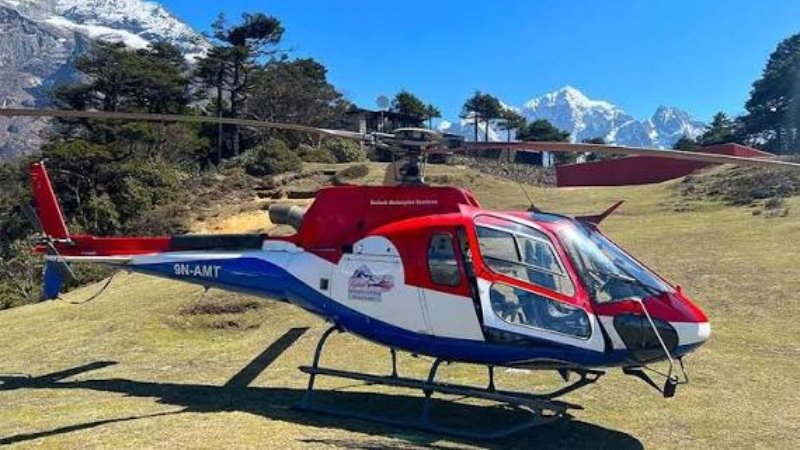
Helicopter tours in Nepal provide an easier way to reach high Himalayan destinations without long trekking days. The helicopter flights depend on the route; travelers can fly from Kathmandu or Pokhara towards different regions like Everest, Annapurna, Gosaikunda, Langtang, and other mountain destination weather via private charter or shared flights, which are comparatively cheaper.
For travelers with limited time, helicopter flights offer quick access to places that would otherwise take days to reach on foot. For example, an Everest Base Camp helicopter tour can include a scenic flight through the Khumbu region, a high-altitude landing, and a same-day return to Kathmandu. Other routes can reach mountain viewpoints, sacred sites, and remote valleys without the need to complete the trek.
In this guide, you’ll find a practical overview of Nepal helicopter tour destinations, typical costs, flight durations, safety considerations, weather policies, and booking tips to help you choose an itinerary that fits your time and travel plans.
Which Helicopter Tour Destinations Are Available in Nepal?
Helicopter routes in Nepal cover the Khumbu region, pilgrimage areas of Mustang, and several trekking hubs for transfers and charter services. The landing point, route, ground time, and availability depend on the season, weather, aviation conditions, and the service booked.
Everest and Khumbu
The Everest or Khumbu region provides several options for luxurious helicopter tours, each with different levels of mountain access. An EBC with Kala Patthar landing gives passengers not only majestic views of the high mountain range, but also a chance to explore around the base camp itself. Similarly, the Hotel Everest View option provides a lower-altitude landing near Syangboche, with Himalayan views and access to the Everest View area. Kongde offers another high-mountain viewpoint above the Khumbu Valley and can be included in sightseeing or private charter itineraries.
Muktinath and Mustang
Another top destination for helicopter tours in Nepal is Mustang and Muktinath. Muktinath is both a tourist destination and an important pilgrimage site sacred to Hindus and Buddhists as well. A helicopter pilgrimage lets travelers reach remote Mustang without the multi-day trek or road journey usually required to reach Muktinath. Depending on the itinerary, they may have time for temple darshan and religious activities before returning by helicopter. You can operate Muktinath Helicopter tours from either Kathmandu or Pokhara, and the choice affects the overall flight experience and itinerary.
A departure from Kathmandu involves a longer mountain flight, while Pokhara is a more direct starting point for the Annapurna and Mustang region. Travelers booking for pilgrimage should check how much time they will have at Muktinath, since temple visit requirements and operating schedules can affect the time available at the site.
Other Helicopter Services
Beyond sightseeing tours, helicopters in Nepal are also used for point-to-point transfers and charter services to trekking destinations. Lukla is a major aviation gateway for the Everest region, while flights to Namche, Pheriche, and Lobuche can provide access to different points along the Khumbu trekking route when permitted. These services can help trekkers shorten a route, arrange an arrival or departure transfer, or adjust their itinerary.
Helicopter charters also serve Mustang and other remote mountain areas, but they depend on weather, landing permissions, aircraft availability, and aviation regulations. They are not standard sightseeing products, so itineraries can often be arranged to suit the traveler’s needs. Before booking, confirm the landing location, passenger capacity, baggage allowance, ground time, and whether the quoted price is for a shared seat or a private charter.
How Much Do Helicopter Tours in Nepal Cost?
The cost of a helicopter tour in Nepal mainly depends on the destination, departure point, flight duration, aircraft arrangement, and whether you book a seat on a shared flight or a private charter. Aero Connect Nepal’s current listings show different rates for Everest, Annapurna, and Muktinath itineraries, so there is no single standard price for all helicopter tours. For example, Everest Base Camp, Hotel Everest View, Annapurna Base Camp, and Muktinath are priced differently based on their routes and inclusions.
A shared helicopter tour means you buy a seat while the aircraft carries other travelers, subject to the operator’s group arrangement; a private charter reserves the helicopter for your group and offers greater flexibility over passengers, routing, and timing, though the total cost is higher. Prices can also change based on departure and landing points, fuel stops, ground time, group size, season, aircraft availability, and operational conditions, so travelers should check what is included in the quoted rate before booking.
| Current Aero Connect Nepal trip | Published price | Approx. duration |
| Kathmandu to Lukla Helicopter Flight | US$540 | 4 hours listed |
| Hotel Everest View Helicopter Tour | US$850 | 4 hours |
| Kongde Helicopter Tour with Breakfast | US$850 | 5 hours |
| Everest Base Camp Helicopter Overfly | US$1,300 | 2 hours |
| Everest Base Camp with Kala Patthar Landing | US$1,600/person | 5 hours |
| Muktinath from Pokhara | US$3,200/helicopter | 5 hours |
| Muktinath from Kathmandu | US$5,400/helicopter | 5 hours |
| Shanta Mani Mustang Helicopter Tour | US$5,800 | 6 days |
These are current prices published by Aero Connect Nepal, so they should be treated as reference rates rather than fixed aviation tariffs. Some trips are sold as shared or private flights, while others are offered as private helicopter charters. The main pricing difference is whether the price is per person or per helicopter.
Is a Helicopter Tour in Nepal Safe?
Helicopter operations in Nepal are authorized by Civil Aviation Authority of Nepal (CAAN), who are the country’s civil aviation regulator. Every commercial helicopter operation must comply with certification and operational requirements.
CAAN’s helicopter flight rules cover pilot qualifications, mountain operations, flight preparation, and operating procedures. For travelers, the key point is that flying a helicopter in the Himalayas is not the same as an ordinary sightseeing flight over flat terrain.
Aero Connects Everest tour information also describes passenger weight verification and aircraft weight-and-balance calculations before departure. At high altitude, aircraft performance is affected by reduced air density, so passenger and baggage weight can influence whether a planned landing is operationally possible.
Weather is another fundamental consideration. Mountain helicopters operate according to actual conditions, visibility, wind and aircraft performance. Aero Connect states that its Everest flights are planned using aviation forecasts, satellite information and high-altitude weather observations.
This is why a responsible booking should never promise that a helicopter will fly no matter the weather. If conditions are unsafe, a delay, rerouting, or cancellation may be the right operational decision. Travelers should therefore see weather flexibility as part of safety, not as a failure of the tour.
Should You Book a Private or Shared Helicopter Tour?
A shared helicopter tour refers to a different variant of helicopter tour where you purchase an empty seat on a pre-scheduled helicopter departure. This structure of a high-altitude sightseeing trip provides accessibility to individual travelers and smaller groups. Meanwhile, a private charter means the helicopter is reserved for a certain group. It is ideal for families, couples traveling together, teams, or photographers that want certain control over the schedule.
The pricing structure between Private and Shared Helicopter tour is quite different.
A shared tour might be quoted per passenger, while a private flight is normally quoted for the aircraft. For example, we at Aero Connect currently list the Pokhara departure at $3,200 per helicopter and the Kathmandu departure at $5,400 per helicopter.
For larger groups, dividing a private charter among passengers can change the effective per-person cost. However, aircraft capacity and high-altitude payload restrictions still apply. The number of people who can safely fly on a particular route is not simply determined by the number of seats in the cabin.
What Should You Check Before Booking?
Before confirming a helicopter tour, ask for specific details instead of relying on a generic package description.
Operator
A booking agency and a helicopter operator are not always the same business. Ask for the licensed operating carrier’s name and confirm the flight is operating under the required aviation authorization.
Exact itinerary
Find out where the helicopter departs, where it lands, how long the flight takes, and whether any refuelling or operational stops are expected.
Guaranteed Landing
For high-altitude routes, the planned landing can depend on weather, wind, temperature, aircraft performance, fuel, passenger weight and other operational factors. Aero Connect specifically notes that Kala Patthar landing arrangements can change when mountain conditions are unsuitable.
Ground Time
This matters particularly for Muktinath and Everest landing tours. A flight that technically includes a landing may provide very different sightseeing time from another itinerary.
Price Per Person or Per Helicopter
Ask for the total cost in writing. Confirm whether taxes, permits, landing fees, transfers and other charges are included.
Weather Departure
Understand the cancellation, rescheduling and refund terms before paying. A mountain flight should have a clear weather procedure.
Passenger Information
Provide accurate body weight and baggage information when requested. These figures can affect aircraft loading and high-altitude flight planning.
When Is the Best Time for a Helicopter Tour in Nepal?
Spring, from March through May, is one of the main times to visit the Himalayas. Mountain views can be good, but conditions can change quickly at high altitude.
Autumn, especially October and November, is another popular time for mountain sightseeing. Demand can be higher then, so it is sensible to check availability in advance.
Winter can provide clear mountain views, but temperatures are much lower and high-altitude landing sites can be difficult.
Monsoon, usually from June to September, brings more rain, clouds, and visibility problems across much of Nepal. Flights can still operate when conditions allow, but travelers should keep their plans flexible rather than rely on an exact connection for a mountain helicopter tour.
The general rule is simple: choose a favorable season, but still treat the actual flight as weather-dependent.
FAQs
- How much does a helicopter tour in Nepal cost?
The cost depends on where you are going, how long the flight takes, where you land, and whether you join a shared flight or book a private charter. Popular routes like Everest Base Camp, Kala Patthar, and Muktinath have different prices depending on the itinerary and operating requirements.
- What are the most popular helicopter tours in Nepal?
Popular helicopter tours include Everest Base Camp with Kala Patthar, Everest mountain overfly, Hotel Everest View, Kongde, and Multipath. Each route offers different views, landing times, sightseeing, and pilgrimage access.
- What is the best time for a helicopter tour in Nepal?
The main seasons are spring (March to May) and autumn (September to November), when mountain visibility is often better. Flights are weather-dependent year-round, and departures can be delayed, rescheduled, or cancelled when conditions are not safe.
- Are helicopter tours in Nepal safe?
Helicopter flights in Nepal follow Civil Aviation Authority of Nepal (CAAN) rules and depend on weather and operating conditions. Before booking, passengers should choose a company that clearly explains the aircraft, operator, weather policy, landing conditions, and cancellation or rescheduling terms.
- Should I book a shared helicopter tour or a private charter?
A shared flight can lower the per-person cost and works for travelers who are comfortable with a fixed itinerary and schedule. A private charter offers more flexibility for groups, scheduling, and trip planning, but it costs more overall.
Final Thoughts:
You should book a helicopter tour by choosing the destination first, then look at the flight details. Everest has the widest range of sightseeing options. After choosing a destination, compare the itinerary, not just the price. Check the aircraft operator, landing arrangements, ground time, passenger requirements, inclusions, and weather policy.
Most importantly, mountain aviation requires flexibility. Weather, visibility, wind, aircraft performance, and regulations can change the day’s plan. A good booking explains these conditions before departure instead of promising an itinerary that cannot be safely guaranteed.