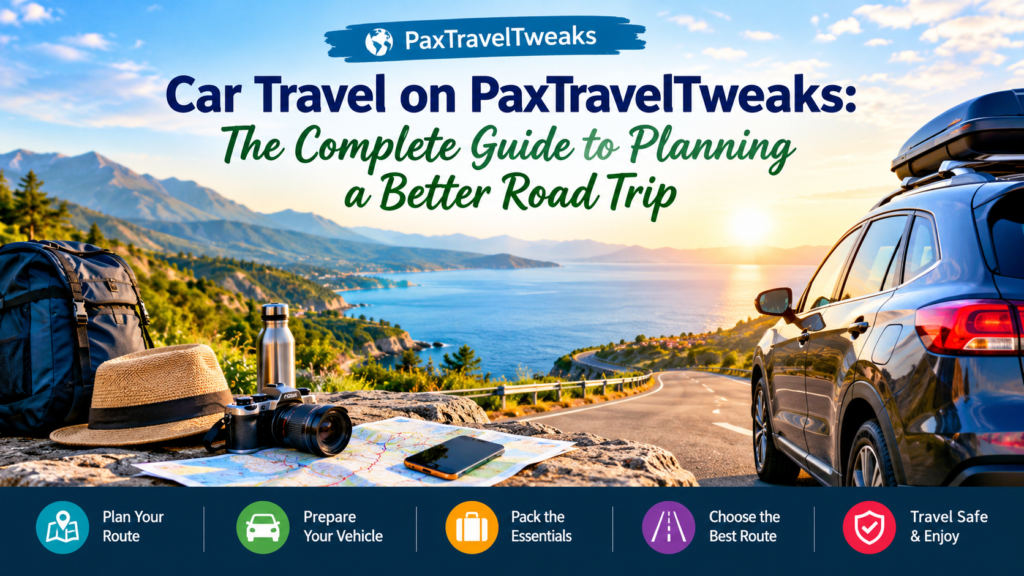
Car Travel on PaxTravelTweaks: Complete Road Trip Guide

A road trip is more than a drive from one destination to another. It gives travelers the freedom to choose their route, stop when they want, discover less-visited places, and adjust plans along the way. When approached thoughtfully, car travel on PaxTravelTweaks can be a practical way to organize a comfortable and enjoyable journey.

The key is preparation. A reliable vehicle, realistic itinerary, useful navigation tools, enough rest, and a sensible budget can prevent many common road-trip problems.

Whether you are planning a weekend getaway or a multi-day drive, this guide covers the essential steps for making your journey safer, more comfortable, and easier to manage.

Why Choose Car Travel for a Trip?

Driving offers a type of flexibility that fixed transportation schedules cannot always provide. You decide when to leave, where to stop, and how long to spend at each location.

Car travel can be especially convenient for:

  • Family vacations
  • Weekend getaways
  • Multi-destination trips
  • Scenic routes
  • Visits to rural areas
  • Trips involving bulky luggage or equipment
  • Travelers who prefer flexible schedules

Another advantage is the opportunity to turn the journey itself into part of the experience. A carefully selected route can include viewpoints, local restaurants, historic locations, parks, and small communities that might otherwise be missed.

However, flexibility works best when it is combined with realistic planning.

Start With a Realistic Road-Trip Plan

Before starting the engine, determine what you actually want from the journey.

Are you trying to reach your destination as quickly as possible, or do you want to explore along the way? The answer affects the route, number of stops, accommodation, and amount of driving you should schedule each day.

Create a simple plan that includes:

  1. Starting location
  2. Final destination
  3. Main roads or highways
  4. Planned stops
  5. Fuel locations
  6. Rest breaks
  7. Overnight accommodation, if required
  8. Alternative routes

Avoid creating an itinerary that leaves no room for traffic, meals, unexpected delays, or interesting stops.

Keep Some Flexibility

A useful road-trip schedule should provide direction without making the entire journey feel rushed.

For example, instead of planning ten attractions in one day, choose a few meaningful stops and leave additional time between them. This makes it easier to adapt if traffic becomes heavy or a particular location takes longer than expected.

Choose the Right Route

The shortest route is not necessarily the most enjoyable or practical route.

When comparing routes, consider:

  • Distance
  • Expected traffic
  • Road quality
  • Tolls
  • Fuel availability
  • Weather conditions
  • Rest areas
  • Scenic locations
  • Availability of accommodation

A slightly longer route may be worthwhile if it offers safer roads, better facilities, or attractions you genuinely want to visit.

For remote journeys, identify fuel stations before entering areas where services are limited. It is also sensible to download maps for offline use in case mobile coverage becomes unreliable.

Prepare the Vehicle Before Departure

Vehicle preparation is one of the most important parts of a successful road trip.

A car that works well for short local journeys may still need attention before a long-distance drive. Check the manufacturer’s recommended maintenance requirements and address known problems before leaving.

Basic Vehicle Checklist

Inspect:

  • Tire pressure
  • Tire tread and visible damage
  • Engine oil
  • Coolant
  • Brake condition
  • Lights and indicators
  • Windshield wipers
  • Battery
  • Spare tire
  • Jack and basic tools

If your vehicle is due for servicing, schedule it before the journey.

Do not ignore warning lights or unusual sounds simply because the car is still running. A small problem discovered at home is generally easier to address than the same issue hundreds of miles from your destination.

Pack for the Journey, Not Just the Destination

Good packing makes a noticeable difference during long drives.

Keep essential items where they are easy to reach rather than buried underneath large bags.

Useful Road-Trip Essentials

Consider packing:

  • Drinking water
  • Non-perishable snacks
  • Phone charger
  • Power bank
  • First-aid supplies
  • Flashlight
  • Basic vehicle tools
  • Important travel documents
  • Tissues and cleaning supplies
  • Weather-appropriate clothing
  • Reusable bags

If traveling with children, add suitable entertainment, snacks, drinks, and comfort items.

For colder or unpredictable weather, consider additional clothing and equipment appropriate to the destination and season.

Organize Your Luggage Properly

Packing efficiently is not only about saving space.

Heavy luggage should be positioned securely and as low as practical. Do not place loose objects where they can move around the cabin or obstruct the driver’s view.

Keep frequently needed items—such as water, chargers, documents, and snacks—within easy reach of passengers.

Before closing the trunk, make sure luggage is stable and cannot shift significantly while the vehicle is moving.

Make Comfort Part of the Plan

Long periods behind the wheel can become physically and mentally tiring.

Before departure, adjust the driver’s seat, mirrors, and steering position. Keep frequently used controls accessible without creating distractions.

During longer journeys, schedule regular breaks. A short stop gives everyone an opportunity to stretch, use the restroom, get some water, and reset before continuing.

If the driver becomes sleepy, do not attempt to overcome fatigue with loud music, open windows, or other temporary tricks. Stop somewhere safe and rest.

If multiple qualified drivers are traveling together, sharing driving duties can make extended journeys more manageable.

Control Your Road-Trip Budget

A road trip can look inexpensive when you only consider fuel, but several other expenses can add up.

Create a basic budget before leaving.

Expense What to Include
Fuel Estimated consumption and expected fuel prices
Tolls Highway and bridge charges
Parking Hotels, attractions, and city parking
Food Meals, drinks, and snacks
Accommodation Hotels or other overnight stays
Maintenance Pre-trip service and possible repairs
Activities Attractions and entertainment

If you are traveling with friends or family, agree beforehand on which expenses will be shared and which will be paid individually.

Reduce Unnecessary Fuel Costs

Smooth driving can help avoid unnecessary fuel consumption. Avoid excessive acceleration, unnecessary idling, and carrying items you do not need.

Planning fuel stops can also reduce the risk of running low in areas with limited stations.

Fuel efficiency should never come at the expense of safe driving.

Use Navigation Technology as a Backup, Not a Replacement for Planning

Navigation apps are useful for directions, traffic updates, and finding services. But technology can fail.

A phone may lose its signal, run out of battery, or provide an unsuitable route because of changing road conditions.

Before departure:

  • Download offline maps.
  • Check the overall route.
  • Identify major towns and highways.
  • Save important locations.
  • Keep your phone charged.
  • Know at least the general direction of your journey.

If you need to change navigation settings, pull over somewhere safe rather than interacting with the device while driving.

Check Weather and Road Conditions

Weather can change the driving experience dramatically.

Before leaving, check the forecast for the areas you will travel through rather than looking only at conditions in your departure city.

Pay attention to:

  • Heavy rain
  • Snow or ice
  • Strong winds
  • Fog
  • Extreme heat
  • Flooding
  • Severe storms

If conditions are expected to become dangerous, reconsider the timing or route. A delayed arrival is preferable to taking unnecessary risks.

Plan Rest Stops in Advance

Rest stops should be treated as part of the itinerary rather than an afterthought.

Look for appropriate places to stop along longer stretches of road. Depending on your route, these might include service areas, fuel stations, restaurants, or designated rest areas.

A good break can include:

  • Walking for a few minutes
  • Drinking water
  • Eating a light meal
  • Using the restroom
  • Checking the vehicle
  • Reviewing the next part of the route

Most importantly, never continue driving simply because you want to reach the destination at a particular time.

Discover More Along the Way

One of the most rewarding aspects of driving is the ability to explore beyond the main destination.

Research interesting stops before the trip, but do not make your schedule so rigid that spontaneous discoveries become impossible.

Potential stops include:

  • Scenic viewpoints
  • Local markets
  • Historic sites
  • Beaches
  • Lakes
  • Parks
  • Small towns
  • Local restaurants
  • Short hiking or walking areas

Check opening times, parking arrangements, entry requirements, and seasonal conditions before making a detour.

Keep Roadside Safety in Mind

Unexpected situations can happen even after careful preparation.

If your vehicle develops a problem, try to move to a safe location away from moving traffic when it is possible to do so safely. Turn on hazard lights when appropriate and contact roadside assistance or emergency services if necessary.

A practical emergency kit may contain:

  • Flashlight
  • First-aid supplies
  • Water
  • Basic tools
  • Phone power bank
  • Reflective equipment
  • Necessary vehicle equipment

The exact equipment you need can vary depending on the destination, season, and local requirements.

Avoid Common Road-Trip Mistakes

A better road trip is often the result of avoiding simple planning errors.

Driving Too Far Without Rest

Trying to cover an excessive distance in one day can create fatigue and stress. Build realistic driving periods into your schedule.

Ignoring Vehicle Warnings

Warning lights, unusual noises, fluid leaks, or handling problems should not be ignored before a long journey.

Overloading the Vehicle

Too much luggage can reduce comfort and may affect how the vehicle handles. Pack according to the vehicle’s limits and your actual needs.

Relying Completely on Mobile Internet

Download important maps and information before entering areas where connectivity may be limited.

Forgetting Small Expenses

Parking, tolls, snacks, and minor purchases can gradually increase the total cost of a trip. Include them in your budget.

Making the Schedule Too Tight

A road trip should have enough time for traffic, breaks, meals, and unexpected changes.

A Practical Car Travel Checklist

Use this quick checklist before departure.

Vehicle

  • Check tire pressure and condition
  • Check oil and essential fluids
  • Test lights
  • Check brakes
  • Confirm spare tire and tools
  • Address warning lights or known problems

Route

  • Confirm the main route
  • Check traffic
  • Review weather
  • Identify fuel stops
  • Save rest areas
  • Download offline maps

Packing

  • Water
  • Snacks
  • Phone charger
  • Power bank
  • First-aid supplies
  • Important documents
  • Appropriate clothing
  • Emergency equipment

Safety

  • Wear seat belts
  • Avoid distracted driving
  • Schedule breaks
  • Do not drive while seriously fatigued
  • Keep emergency contacts available

How to Make a Road Trip More Enjoyable

Preparation handles the practical side of traveling, but small choices can improve the experience as well.

Create a playlist or download podcasts and audiobooks before departure. Bring snacks that are easy to store and eat during appropriate stops. If traveling with others, agree on music preferences and stopping plans before the trip.

You can also give each passenger a role. One person might handle navigation while another keeps track of reservations or planned stops. This reduces the need for the driver to manage everything.

Most importantly, do not measure a successful trip only by how quickly you arrive. The flexibility to stop, explore, and enjoy the route is one of the main reasons people choose to travel by car.

Final Thoughts

A successful road journey begins before you leave home. Planning the route, checking the vehicle, packing essential supplies, managing costs, monitoring weather, and scheduling proper rest can make a significant difference.

Car travel on PaxTravelTweaks can be approached as a flexible travel experience where preparation and freedom work together. You can have a clear destination while still leaving room for scenic stops, local discoveries, and unexpected moments.

The best road-trip plan is not necessarily the most complicated one. Start with a safe vehicle, a realistic itinerary, reliable navigation, and enough time to rest. Once those basics are covered, you can focus on what makes driving to a destination enjoyable: the freedom to experience the journey along the way.

Related Post

Scotland is the kind of destination where the journey can be as memorable as the places you visit. Historic cities lead to rugged mountains, quiet lochs, remote islands, ancient ruins, dramatic coastlines, and welcoming towns. The challenge is not finding things to do in Scotland. The challenge is choosing experiences that fit your time, interests, and travel style. A first visit might focus on Edinburgh and the Highlands. A longer trip could add the Isle of Skye, Glasgow, Scotland's islands, whisky country, or a walking route. Families can explore museums, castles, wildlife, and easy outdoor attractions, while adventurous travelers can spend days hiking, cycling, kayaking, or exploring remote landscapes. This guide brings those options together with practical advice so you can build a Scotland itinerary that feels enjoyable rather than rushed. 1. Explore Edinburgh's Old Town Edinburgh is one of the strongest starting points for a Scotland trip. Its Old Town combines medieval streets, historic buildings, atmospheric closes, shops, restaurants, and major landmarks. Walk along the Royal Mile and explore the streets that branch away from it. Edinburgh Castle sits above the city and provides an introduction to Scotland's royal and military history. You can also visit museums and galleries, explore the city's viewpoints, or simply spend time walking through its historic neighborhoods. If this is your first visit, give Edinburgh at least two days. That allows you to experience the major sights without turning the city into a checklist. A useful Edinburgh tip Do not spend the entire visit around the Royal Mile. Areas such as Dean Village, Stockbridge, and the Water of Leith offer a different view of the capital. 2. Visit Edinburgh Castle Edinburgh Castle is one of Scotland's most recognizable landmarks and an obvious choice for travelers interested in history. Its elevated position also gives visitors impressive views across Edinburgh. Inside, you can explore historic buildings, military displays, and locations connected with Scottish royalty. Because the castle is one of the city's major attractions, checking opening information and booking requirements before visiting is sensible, especially during busy periods. 3. Experience the Scottish Highlands The Highlands are among the biggest reasons travelers visit Scotland. This huge region offers mountains, glens, lochs, forests, wildlife, small communities, and scenic roads. You can experience it through hiking, driving, guided tours, rail journeys, or relaxed sightseeing. Do not assume that exploring the Highlands requires strenuous hiking. Many of the region's most impressive landscapes can be enjoyed from viewpoints and accessible walking routes. Visit Scotland highlights the Highlands, Glencoe, Ben Nevis, Loch Ness, and Loch Lomond among Scotland's major destinations. How long should you spend there? If possible, allow several days. A single day can provide a taste of the Highlands, but longer stays give you more time for scenic stops and less time sitting in a vehicle. 4. See the Dramatic Landscapes of Glencoe Glencoe combines dramatic scenery with a deep historical background. The valley is surrounded by mountains and offers some of the most memorable landscapes in the Highlands. It is also convenient for road trips between central Scotland and the western Highlands. You can stop at viewpoints, take shorter walks, or use the area as a base for longer outdoor adventures. Weather can change quickly here, so bring suitable clothing even when the forecast looks favorable. 5. Explore the Isle of Skye The Isle of Skye is ideal for travelers who want dramatic scenery, coastal landscapes, mountains, waterfalls, and outdoor adventures. Portree provides a useful base, while the Trotter Nish Peninsula offers some of the island's most recognizable landscapes. Skye is particularly rewarding for photographers and hikers, but you do not need to be an experienced walker to enjoy it. Plan your driving carefully. Distances can look short on a map but take longer because of rural roads, viewpoints, traffic, and weather. Lonely Planet currently includes Skye among Scotland's key destinations and identifies it as particularly appealing to photographers. 6. Discover Loch Ness Loch Ness is famous around the world because of the legendary Loch Ness Monster, but the landscape itself is reason enough to visit. The long freshwater loch is surrounded by Highland scenery, villages, walking opportunities, and historic attractions. Urquhart Castle is one of the most notable places to explore near the loch. A boat trip can also provide a different perspective of the surrounding landscape. For a more complete experience, combine Loch Ness with Inverness and other nearby Highland destinations. 7. Walk Part of the West Highland Way You do not need to complete a long-distance trail to enjoy Scotland's walking culture. The West Highland Way is one of the country's best-known long-distance routes. It travels between the Glasgow area and Fort William through lochs, mountains, moorland, and Highland landscapes. The complete route requires several days, but travelers with less time can explore selected sections. If you plan a longer hike, arrange accommodation and transport in advance during busy periods. Carry appropriate clothing, water, food, navigation equipment, and other essentials for the conditions. Lonely Planet currently highlights the route as one of Scotland's major experiences and notes that many hikers complete it over about a week. 8. Visit Historic Scottish Castles Scotland's castles offer more than attractive photographs. They help explain the country's complicated royal, military, and political history. Edinburgh Castle is the most obvious choice, but it should not be your only option. Stirling Castle is particularly interesting for history-focused travelers. Across Scotland, you will also find ruined castles, coastal fortifications, grand estates, and smaller historic sites. Instead of trying to visit as many castles as possible, select those that fit your route and interests. 9. Discover Glasgow's Culture and Architecture Glasgow provides a different experience from Edinburgh. The city has museums, galleries, music venues, restaurants, distinctive architecture, and a strong creative culture. Art and architecture enthusiasts can explore places associated with Charles Rennie Mackintosh. The city is also a useful base for trips toward Loch Lomond and the western part of Scotland. Glasgow works especially well for travelers who want to combine sightseeing with food, music, and urban culture. 10. Take a Scenic Road Trip A road trip gives you greater freedom to stop at viewpoints, villages, beaches, and less-visited places. The North Coast 500 is one of Scotland's most famous driving routes, particularly for travelers interested in northern Highland scenery and coastal landscapes. However, do not plan your trip around completing a specific number of miles each day. Scottish rural roads can be narrow and slow. You will also want time to stop for photographs, walks, food, and unexpected discoveries. Road-trip tip Plan fewer destinations each day. A slower itinerary usually gives you more time to experience Scotland rather than simply driving through it. 11. Experience Scottish Whisky Country Whisky is deeply connected with Scotland's heritage. Visitors can tour distilleries, learn about production, discover different whisky regions, and take part in tastings. Speyside is particularly well known for its concentration of distilleries. Lonely Planet currently notes more than 50 distilleries in the wider Speyside area and highlights the Malt Whisky Trail. You do not need to be a whisky expert to enjoy a distillery visit. Tours often explain the history and production process before the tasting. If you are driving, arrange a designated driver or choose another form of transportation. 12. Explore Scotland's Islands Scotland's islands provide a different pace of travel. Skye is the most famous option for many visitors, but islands such as Arran, Mull, Orkney, Shetland, and the Outer Hebrides offer their own landscapes and cultural experiences. Depending on the island, you can find beaches, wildlife, archaeological sites, walking routes, fishing communities, and historic landmarks. Ferry schedules and weather can affect island travel, so build flexibility into your itinerary. Visit Scotland currently lists hundreds of Scottish islands as destinations to explore, including Skye, Arran, Lewis, the Outer Hebrides, and Shetland. 13. Explore Ancient Orkney Orkney is an excellent choice for travelers interested in archaeology and ancient history. The islands contain important prehistoric sites, including Sara Brae and other monuments associated with the Heart of Neolithic Orkney. The journey requires more planning than a city break, but that distance makes the experience feel different from Scotland's busiest tourist areas. Give yourself enough time to explore several sites rather than visiting for only a few hours. 14. Enjoy Scotland's Beaches Scotland's coastline may surprise travelers who expect only mountains and castles. The country has beaches with white sand, clear water, cliffs, dunes, and wide open landscapes. Some beaches are remote and peaceful, making them excellent for walking, photography, wildlife watching, and quiet escapes. The sea can remain cold even during warmer months, so think of Scottish beaches as places for scenery and exploration rather than relying on traditional swimming holidays. 15. Go Wildlife Watching Scotland offers many opportunities to experience wildlife in natural environments. Depending on the region and season, travelers may see red deer, seals, otters, seabirds, red squirrels, and other species. The islands and northern coastal areas can be especially interesting for wildlife enthusiasts. Wild animals remain unpredictable, so choose responsible tours and never disturb animals to get a closer photograph. 16. Explore Loch Lomond and The Trossachs Loch Lomond and The Trossachs are convenient for travelers who want nature without traveling deep into the Highlands. The region offers lochs, forests, hills, walking routes, viewpoints, and water-based activities. Its location also makes it practical for travelers staying around Glasgow. You can visit for a day or spend several nights exploring the surrounding countryside. 17. Try Scottish Food Food should be part of your Scotland itinerary. Traditional options include haggis, Cullen skink, smoked salmon, shortbread, local cheeses, seafood, and other regional products. Modern Scottish restaurants also use local ingredients in contemporary dishes. Try food in different settings. Independent cafés, markets, pubs, restaurants, and local producers can each provide a different experience. Food is not simply something to fit between attractions. It can also help you understand regional traditions. 18. Visit Museums and Galleries Scotland's cultural attractions are particularly useful when weather interrupts outdoor plans. Edinburgh and Glasgow both have major museums and galleries, while other cities and towns offer smaller collections focused on local history. Visit Scotland highlights museums, galleries, free attractions, history, heritage, and cultural sites among the country's major attraction categories. These places also add context to your trip. After visiting a museum, historic site, or cultural exhibition, landscapes and landmarks can become easier to understand. 19. Experience Highland Games and Scottish Traditions If your trip coincides with a Highland Games event, consider attending. Traditional Highland Games can include athletic competitions, music, dancing, and community celebrations. Scotland's cultural calendar also includes festivals, traditional music, food events, and seasonal celebrations. Check dates before traveling because events operate on specific schedules. 20. Visit St Andrews St Andrews is an appealing stop for both history and golf enthusiasts. The town has a historic university, coastal scenery, ruins, and a strong connection with golf. You can explore the old streets, visit historic sites, walk along the coast, or experience the town's famous golf heritage. It works well as a day trip from Edinburgh or as part of a longer east-coast itinerary. 21. Take a Scenic Train Journey You do not always need a car to experience Scotland's scenery. Rail journeys can provide a comfortable way to see landscapes while avoiding the concentration required for driving. Some routes are particularly famous for their scenery, including journeys through the Highlands toward the west coast. For travelers who prefer not to drive, combining trains with local buses, ferries, and guided tours can create a practical Scotland itinerary. 22. Find Free Things to Do in Scotland Scotland can become expensive if every activity involves an admission ticket, but many memorable experiences cost little or nothing. Walking through historic neighborhoods, enjoying public viewpoints, exploring beaches, visiting suitable museums and galleries, and hiking accessible trails can help control your budget. You can also enjoy scenic drives without paying for individual attractions at every stop. Visit Scotland specifically highlights free attractions as one of the major categories for Scottish visitors. 23. Explore Scotland's Dark Skies Scotland's relatively remote landscapes can provide excellent opportunities for stargazing. Away from major cities, darker skies make it possible to see far more stars than you would in an urban environment. Visit Scotland currently promotes dark-sky parks and stargazing experiences as part of Scotland's nature-based attractions. Check the weather and moon conditions before planning a dedicated stargazing night. 24. Choose an Outdoor Adventure Scotland works well for travelers who prefer active holidays. Depending on your ability and location, you can try hiking, cycling, mountain biking, kayaking, paddle boarding, climbing, or coastal walking. The key is choosing an activity that matches the conditions. Mountain weather can change quickly. Check forecasts, follow local advice, carry appropriate equipment, and do not underestimate remote terrain. 25. Slow Down and Explore Beyond the Famous Places One of the most valuable things to do in Scotland is to leave some space in your itinerary. Scotland has famous destinations, but smaller towns, quiet coastlines, local cafés, historic villages, and lesser-known walking routes can become some of the most memorable parts of a trip. Visit Scotland itself encourages visitors to explore beyond the most familiar destinations and discover less-traveled places. You do not need to see every famous landmark to have a great Scotland trip. Best Things to Do in Scotland by Traveler Type Different travelers will enjoy different parts of Scotland. For first-time visitors Start with Edinburgh, the Highlands, Glencoe, and Loch Ness. Add Skye if you have enough time. For nature lovers Prioritize the Highlands, Skye, Loch Lomond, Scotland's islands, coastal areas, and walking routes. For history lovers Explore Edinburgh Castle, Stirling, ancient sites, historic towns, museums, abbeys, and archaeological sites. For food and whisky lovers Build your trip around Edinburgh, Glasgow, local food destinations, and whisky-producing regions such as Speyside. For families Choose museums, castles, wildlife experiences, scenic journeys, easier walks, and attractions with indoor alternatives. For budget travelers Mix paid attractions with free museums, public spaces, hiking, viewpoints, beaches, and self-guided sightseeing. How Many Days Do You Need in Scotland? There is no single answer because Scotland's size can be misleading when planning a route. 3 days in Scotland Focus on Edinburgh and one nearby region or a carefully planned day trip. Trying to combine Edinburgh, Skye, the Highlands, and Glasgow in three days will leave little time to enjoy any of them. 5 days in Scotland Five days gives you more flexibility. You could combine Edinburgh with a Highlands route and include places such as Glencoe or Loch Ness. 7 days in Scotland A week allows a more balanced itinerary. You can consider Edinburgh, the Highlands, Skye, Glasgow, or another region depending on your interests. 10 days or more Longer trips make it easier to include islands, northern Scotland, Orkney, additional walking routes, or slower road trips. The most important rule is simple: do not build an itinerary around too many distant destinations. When Is the Best Time to Visit Scotland? The best time depends on what you want from the trip. Spring can be appealing for countryside, gardens, and walking. Summer provides long daylight hours and is popular for outdoor activities, but major destinations can be busy. Autumn can bring colorful landscapes and a different atmosphere, particularly for photography and countryside trips. Winter offers shorter days and colder conditions but can be rewarding for city breaks, seasonal events, dramatic landscapes, and certain outdoor experiences. Instead of searching for one perfect month, choose your travel period according to your activities. Practical Tips for Planning a Scotland Trip Do not underestimate travel time A destination that looks close on a map may take much longer to reach because of rural roads, mountains, ferry crossings, and frequent scenic stops. Check conditions before outdoor activities Weather can change quickly, especially in the Highlands and mountains. Book popular experiences early Accommodation, ferries, major attractions, and some tours can become busy during peak travel periods. Avoid overpacking your itinerary Leave time for unexpected stops. Scotland rewards travelers who are willing to slow down. Plan remote journeys carefully Remote areas may have fewer shops, fuel stations, restaurants, and transport options. Respect the landscape Follow local access guidance, take your rubbish with you, protect wildlife, and leave natural areas as you found them. Visit Scotland also recommends planning ahead, booking where appropriate, leaving nothing behind, and exploring responsibly. A Simple Scotland Itinerary for First-Time Visitors If you are unsure where to start, this structure provides a practical foundation. Days 1–2: Explore Edinburgh, including the Old Town, castle, museums, viewpoints, and local food. Day 3: Travel toward the Highlands and explore Glencoe or another suitable Highland area. Days 4–5: Continue through the Highlands and explore Loch Ness or nearby destinations. Days 6–7: Add the Isle of Skye or return toward Glasgow, depending on your route and transportation. This is only a framework. Your final route should depend on transportation, weather, accommodation, and the places you most want to experience. Frequently Asked Questions What are the best things to do in Scotland? Popular choices include exploring Edinburgh, visiting the Highlands, seeing Glencoe and Loch Ness, exploring the Isle of Skye, visiting castles, enjoying Scottish food and whisky, and experiencing Scotland's outdoor landscapes. How many days are enough for Scotland? Five to seven days can provide a strong introduction to Scotland. Longer trips are better if you want to explore islands, northern Scotland, or several regions without rushing. What should I see in Scotland for the first time? Edinburgh and the Scottish Highlands are strong starting points. If your schedule allows, add Glencoe, Loch Ness, Skye, or another destination that matches your interests. Is the Isle of Skye worth visiting? Yes, particularly if you enjoy mountains, coastal scenery, photography, hiking, and quieter landscapes. Allow enough time because reaching and exploring the island can take longer than expected. Is Scotland expensive to visit? Costs vary by season, destination, accommodation, and travel style. You can reduce expenses by mixing paid attractions with free outdoor activities, public spaces, museums, and self-guided sightseeing. What is Scotland famous for? Scotland is famous for its landscapes, Highlands, castles, lochs, whisky, islands, historic cities, traditional culture, golf, and outdoor experiences. Can you visit Scotland without a car? Yes. Edinburgh and Glasgow have strong public transport connections, and trains, buses, ferries, and guided tours can help you reach many other destinations. A car provides more flexibility in remote areas, but it is not essential for every itinerary. What are good things to do in Scotland when it rains? Museums, galleries, historic attractions, cafés, distillery tours, shopping, cultural experiences, and indoor attractions can keep your trip enjoyable during wet weather. What are some less-touristy things to do in Scotland? Consider smaller towns, quieter coastal areas, lesser-known islands, local museums, regional food experiences, and off-the-beaten-path walking routes. The best choice depends on your route and interests. Final Thoughts The best things to do in Scotland are not limited to its most photographed landmarks. Edinburgh provides history and culture. The Highlands bring dramatic landscapes. Skye offers rugged coastal scenery. Glasgow adds art, music, and city energy. Scotland's islands, castles, beaches, walking routes, food, whisky, and wildlife create even more reasons to explore beyond the obvious stops. Visit my website for more details. The secret to a better Scotland trip is not trying to see everything. Choose experiences that match your interests, group nearby destinations together, allow extra travel time, and leave room for unexpected discoveries. Things to Do in Scotland

Things to Do in Scotland: 25 Best Experiences & Travel Tips

Scotland is the kind of destination where the journey can be as memorable as the places you visit. Historic cities lead to rugged mountains, quiet lochs, remote islands, ancient ruins, dramatic coastlines, and welcoming towns. The challenge is not finding things to do in Scotland. The challenge is choosing experiences that fit your time, interests, […]

TTweakAirline Discount Code From TravelTweaks

TTweakAirline Discount Code From TravelTweaks: Complete Guide

Finding an affordable flight can take more than simply searching for the lowest ticket price. Travelers also need to consider baggage, seat selection, taxes, fare rules, and other costs that can change the final amount they pay. That is why many people search for a TTweakAirline Discount Code From TravelTweaks before booking a flight. A promotional […]

Highlights of Nummazaki featuring coastal scenery and Mount Fuji views

Highlights of Nummazaki: Top Attractions, Food & Travel Tips

Japan has no shortage of coastal destinations, but some places stand out because they combine natural beauty with local culture and a slower pace of travel. The term Highlights of Nummazaki is often used online when discussing the coastal attractions around Numazu and the western side of Suruga Bay in Shizuoka Prefecture. Travelers looking into […]