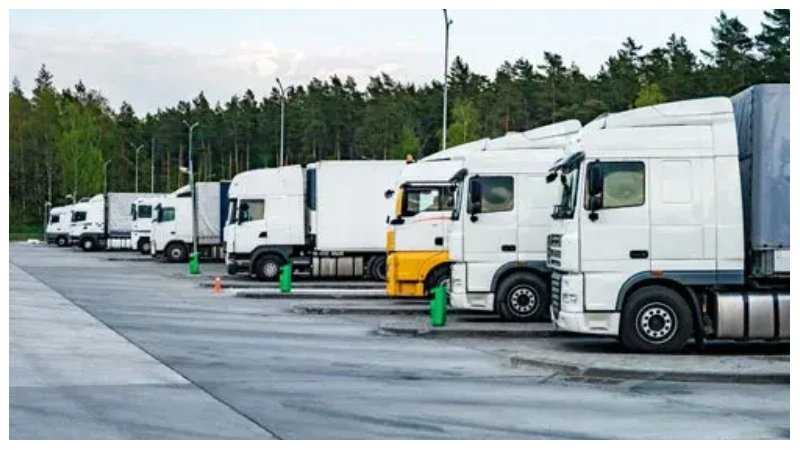
Finding a suitable place to park a commercial truck is an important consideration for owner-operators, fleet managers, and professional drivers. Whether a driver operates a semi truck with a trailer or a bobtail without one, choosing the right parking location can help protect the vehicle, support daily operations, and simplify route planning.
Searching for secure truck parking involves more than finding an available space. Drivers should evaluate property access, parking conditions, vehicle compatibility, and the security features actually provided at each location. Those looking for bobtail truck parking also need to consider the specific dimensions and maneuvering requirements of a tractor without an attached trailer.
This guide explains how to evaluate commercial truck parking options and choose a location that fits your vehicle and operating needs.
1. Understand What Secure Truck Parking Means
Secure truck parking generally refers to commercial parking locations that offer features intended to help control access and protect parked vehicles. However, security arrangements vary between properties.
Depending on the location, features may include:
- Fenced or enclosed parking areas
- Controlled entry and exit
- Gate access procedures
- Security lighting
- Surveillance cameras
- On-site personnel or property monitoring
Not every parking facility provides all these features. Before booking, ask the property owner or operator which security measures are available and how they work.
Drivers should also review the property’s parking rules and determine whether its arrangements meet their operational requirements.
2. Identify Your Bobtail Truck Parking Requirements
A bobtail truck is a semi-truck tractor operating without an attached trailer. Because it has a different configuration from a tractor-trailer combination, its parking requirements may also differ.
When looking for bobtail truck parking, consider:
- Tractor length and width
- Vehicle height
- Turning radius
- Available maneuvering space
- Entrance and exit clearance
- Whether the property specifically permits bobtail parking
Some commercial parking locations may primarily accommodate full tractor-trailer combinations. Confirm that the property accepts tractors without trailers before making a booking.
3. Choose a Convenient Location Along Your Route
The location of a parking facility can affect travel time, operating costs, and access to your next destination.
When comparing secure truck parking locations, consider proximity to:
- Major highways and truck routes
- Freight corridors
- Warehouses and distribution centers
- Industrial areas
- Trucking company facilities
- Regular pickup and delivery locations
Check the route to the property’s entrance rather than relying only on map distance. Low bridges, weight restrictions, narrow roads, and restricted truck routes can make a nearby location difficult to reach.
For bobtail operators, a location near a regular operating area may also be useful when a tractor needs to remain parked between assignments.
4. Evaluate Property Access and Parking Layout
A parking location should accommodate your truck safely and practically. Even when a property offers security features, its layout may not be suitable for every commercial vehicle.
Before selecting a space, check:
- Parking space dimensions
- Entrance and exit width
- Turning and maneuvering room
- Surface condition
- Vehicle parking restrictions
- Access hours and entry procedures
For bobtail truck parking, confirm that the space is appropriate for a tractor without an attached trailer. Ask whether designated spaces are available and whether there are any restrictions on vehicle positioning.
Clear access information can help prevent delays when arriving or departing.
5. Compare Short-Term and Long-Term Parking Options
Commercial truck parking needs vary depending on the driver’s schedule and business operations.
Common parking arrangements include:
Short-term parking: Useful when a driver needs a temporary location between work assignments or scheduled stops.
Overnight parking: Suitable for drivers who need to park before continuing their route.
Weekly parking: Can work for owner-operators or businesses operating in the same area for several days.
Monthly parking: May suit drivers and companies that need recurring parking near their operating locations.
Fleet parking: Helps businesses evaluate parking arrangements for multiple tractors, trailers, or other commercial vehicles.
Before choosing an option, review the permitted parking duration, payment terms, access hours, and any restrictions that apply to your vehicle.
6. Check Security Features Before Booking
A property described as secure should be evaluated based on its actual facilities and procedures. Drivers should avoid relying on general descriptions without confirming the details.
Questions worth asking include:
- Is the parking area fenced?
- Is entry controlled by a gate or another procedure?
- Are surveillance cameras installed?
- Is lighting available throughout the parking area?
- Is on-site personnel available?
- Are there specific rules for overnight parking?
- Who should be contacted if an access issue occurs?
The answers can help you compare locations based on your needs. Remember that security features do not guarantee that theft, damage, or other incidents cannot occur.
Drivers should also use their own precautions, such as securing the vehicle, removing valuables where practical, and following company safety procedures.
7. Consider Parking Needs for Owner-Operators and Fleets
Owner-operators and fleet managers may approach truck parking differently.
An owner-operator may need one suitable space for a tractor, particularly when returning to the same area between jobs. A fleet manager may need multiple spaces for tractors, attached trailers, or detached equipment.
When planning parking for a commercial operation, consider:
- Number of vehicles requiring parking
- Whether tractors and trailers need separate spaces
- Expected parking duration
- Location relative to depots and freight destinations
- Access requirements for different drivers
- Potential changes in fleet size
For fleets that regularly operate bobtail tractors, confirming that a property accommodates this vehicle configuration can help avoid unnecessary complications.
8. Use a Commercial Truck and Trailer Parking Marketplace
Finding and comparing individual parking properties can take time. A commercial truck and trailer parking marketplace can help drivers and businesses explore parking options that are relevant to their operations.
Stackkly is a commercial truck and trailer parking marketplace designed to help truck drivers, owner-operators, fleet operators, trucking companies, and logistics businesses find and book parking for commercial vehicles.
Its focus is on commercial parking needs rather than general consumer vehicle storage. Drivers looking for secure truck parking or bobtail truck parking can explore relevant property options and review the details that matter to their vehicle and schedule.
Before booking, users should confirm whether the property accommodates their specific truck configuration and verify any security features, access arrangements, and parking rules directly.
9. Top Companies in Commercial Truck and Trailer Parking
Drivers researching commercial parking may encounter several platforms and services.
- Stackkly
Stackkly is a commercial truck and trailer parking marketplace that helps drivers, owner-operators, fleet operators, and logistics businesses find and book commercial parking options. - Truck Parking Club
Truck Parking Club connects truck drivers with parking locations listed through its platform. Drivers can explore potential locations and review individual property details. - Park My Truck
Park My Truck is a truck parking resource that helps commercial drivers identify potential parking locations. Drivers should confirm current location details and parking requirements. - Truck Parking USA
Truck Parking USA is another resource drivers may encounter when researching commercial truck parking. Users should review individual location information before making arrangements.
When comparing platforms, consider location coverage, vehicle compatibility, property information, booking arrangements, and parking duration.
10. Plan Ahead for More Practical Truck Parking
Waiting until the last minute can make it harder to find a suitable parking space, particularly near busy freight corridors and industrial areas.
A few planning habits can make the process easier:
- Identify possible parking locations before starting a trip.
- Keep your vehicle dimensions and configuration ready.
- Confirm that bobtail tractors are accepted where applicable.
- Check the property’s access hours and entry procedures.
- Ask about security features rather than assuming they are available.
- Review the route and entrance before arriving.
- Keep an alternative parking option in mind.
Planning ahead is especially useful for owner-operators who need recurring parking and fleet managers coordinating multiple commercial vehicles. Click here for more Information.
Conclusion
Choosing secure truck parking requires careful attention to property access, security features, parking conditions, and vehicle compatibility. Drivers should verify what each location actually provides instead of relying on general descriptions.
For operators who need bobtail truck parking, it is equally important to confirm that the property accommodates tractors without attached trailers and provides enough room for safe entry and maneuvering.
Stackkly supports commercial drivers and businesses through a marketplace focused on truck and trailer parking. By comparing relevant locations and checking property requirements before booking, drivers and fleet operators can make more informed commercial parking decisions.