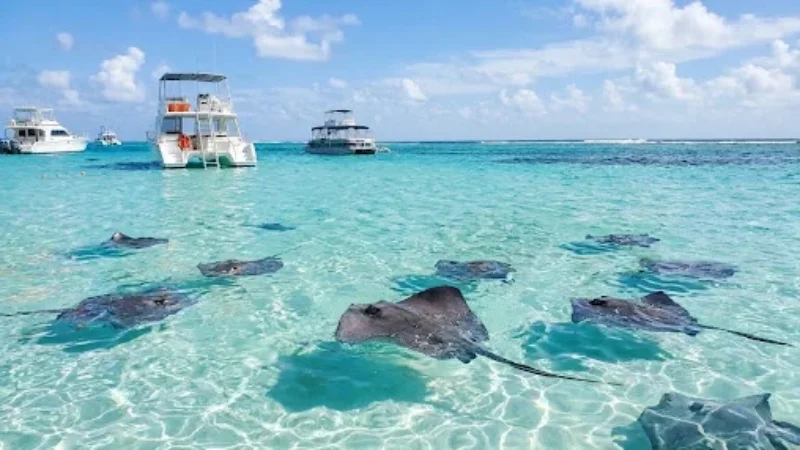
Swimming with stingrays is one of the most unforgettable experiences to enjoy during a beach getaway. However, many who have yet to visit Stingray City may have questions about the safety, what you need to take, and how to responsibly engage with these amazing animals. Knowing what happens on your visit can help make you more confident and ensure you don’t disrupt any marine life.
When visiting Grand Cayman, there are a few great places to start researching Stingray City and what trips you can do from The Reef Beach Resort. Knowing more about the area and how the stingrays behave will help you pick the right trip for you.
What is Stingray City?
Stingray City is a popular marine attraction in the waters of Grand Cayman in the Caribbean’s Cayman Islands. It is renowned for its shallow sandbars and reefs, where large numbers of southern stingrays gather.
There are generally two types of activities available. One takes place on the shallow sandbars, where you can stand in the water and get up close to the stingrays. Another will be around deeper reef areas where you can snorkel to see the marine life in their natural habitat. Depending on where you go, the weather and the itinerary, you may have a different experience.
Stingray City is a popular activity for couples, families, and first-time snorkelers. There isn’t necessarily any advanced swimming needed to learn about these marine animals. Always check the age restrictions, swimming ability requirements, and safety guidelines before booking.
Know How They Behave
Stingrays are flat-bodied fish related to sharks. They have large pectoral fins to allow them to swim gracefully. Their mouth and gills are located on their underside.
Southern stingrays will commonly eat small animals that live on or under the seabed, such as crustaceans, worms, and molluscs. They use special senses to find their prey hidden in the sand. Although stingrays are generally not aggressive towards humans, they are still wild animals and should be treated with respect. Their tails have a defensive spine that can cause serious injury if they feel threatened.
To avoid any unwanted situations:
- Don’t chase, grab, or corner them.
- Don’t try to lift them out of the water.
- Move calmly.
- Listen to your trained guides.
- Give them space.
Most importantly, you want to be an observer. Giving them space will keep you and marine life safe.
Pick the Right Trip
Not all trips will be the same. Picking the right one can really help you feel more comfortable.
First-Time Snorkellers
Choose a tour that provides clear safety instructions and guidance on how to use the equipment properly. Ask if there are floats available and if the guides will be in the water with you.
Although advanced snorkelling skills aren’t necessary for exploring the shallow waters, you should be comfortable following safety instructions.
Families with Children
Check the minimum age, swimming ability requirements, life jacket availability, and supervision arrangements. Parents should also make sure the experience is appropriate for their child’s individual abilities.
Teach children to treat stingrays with respect, reminding them that they are wild animals, not toys, and that they must always follow the guide’s instructions.
Experienced Swimmers
Going to the sand bars and snorkelling around the reef could give you a wider view of the local marine life. Be sure to check the itinerary carefully, as going deeper into the water can cause currents to change with the weather, making it more challenging.
What to Take
Bringing the right essentials will help keep you comfortable throughout the experience. Many tour operators provide equipment, so check what’s included before packing.
Things to consider taking:
-
- Swimwear – Something comfortable to get into the water.
- Sun protection – Apply reef-friendly sunscreen and wear a sunhat and sun-protective clothing to shield yourself from the sun.
- Towel and dry clothes – To make the journey back more comfortable.
- Waterproof bag – To keep your valuables safe.
- Reusable water bottle – Stay hydrated by bringing a reusable water bottle, especially in the hot, sunny weather.
- Seasickness medication – If you’re prone to seasickness, consult your healthcare professional or pharmacist about suitable medication before your trip.
Avoid bringing valuables on board whenever possible. If you take your phone or camera, protect them with suitable waterproof cases or bags. Ask your guide if you can take photos.
Basic Water Safety
Even on a short trip, it’s essential to take water safety seriously and follow all safety guidelines. Just because the water is calm when you set off doesn’t mean it will stay that way.
Pay close attention to the safety briefing and don’t hesitate to ask questions if anything is unclear.
Things to remember:
- Wear your lifejacket.
- Always follow the crew’s instructions when getting on or off the boat to ensure your safety.
- Stay within the swimming area.
- Never swim beyond your comfort level or abilities just to get a closer look at the stingrays.
- If you are feeling unwell, tired, or uncomfortable, don’t get in the water.
- Follow instructions if the weather or water changes.
If you aren’t a confident swimmer, be sure to let the company know. Ensure the trip will be suitable for you and what support is on offer.
Parents/guardians should supervise children closely. Even though there will be a guide present, it is still your responsibility.
Responsible Wildlife Tourism
Whilst these trips can teach you about the ocean, they also come with responsibilities. Animals can change their behaviours due to human activity. If they are regularly seeing boats, crowds and food this can impact them.
Pick companies that will tell you how to interact with the animals responsibly. Follow local guidelines to keep marine life safe.
Whilst there
Don’t feed the stingrays unless you have an authorised guide overseeing the interaction and following any local guidelines.
- Don’t take any food into the water.
- Don’t touch any sensitive areas or handle them unless specifically told to.
- Don’t stand on the coral or take any marine life.
- Don’t put any litter, plastics, or rubbish in the water.
- Follow any guidelines on where to stand and how to move.
Responsible wildlife tourism isn’t just about keeping you safe. It’s about ensuring the activity you’re doing is keeping the animals stress-free. By choosing responsible interactions, you are helping to protect them.
Choosing responsible interactions can help with conservation. Avoiding any activities that involve harassing or handling the animals. Learn about the species you’re seeing.
Weather Considerations
The weather can impact when you set off, how clear the water is, how the water is moving, and how comfortable you’ll be on the boat. The weather may also be different depending on whether you’re going to the sand bars or reef.
Be sure to check the weather forecast and listen to any updates from the company. Your trip may be delayed, altered, or cancelled if the weather is not suitable. If you’re going with children, the elderly, or anyone who gets uncomfortable on boats, ask how long the journey will be and if there are seats/shade.
It’s a good idea to leave some flexibility in your holiday plans. Don’t plan anything important like flights straight after your marine activity, as the weather may impact when you set off.
Learning
Knowing more about the animals and their environment can make your visit to Stingray City more meaningful. Before your trip, research how stingrays play a role in the marine ecosystem and how the coastal habitats support different species.
Whilst there, ask your guide questions about how they feed, reproduce, their adaptations, and challenges with conservation. Children can also be encouraged to watch how they move and how their bodies are different to other fish.
After your trip, have a chat about what you learnt and why it’s important to be responsible when visiting wildlife habitats. Simple conversations can help turn your fun day into a learning experience.
Conclusion
By preparing, having realistic expectations, and respecting marine life, you can have a successful visit to Stingray City. By picking the right trip, knowing how the stingrays behave, following safety guidelines, and considering the weather, you can feel more comfortable.
Most importantly, remember you’re in their environment. By being observant, following local guidelines, and avoiding any harmful interactions, you can have a memorable Caribbean adventure whilst helping to protect the wildlife.