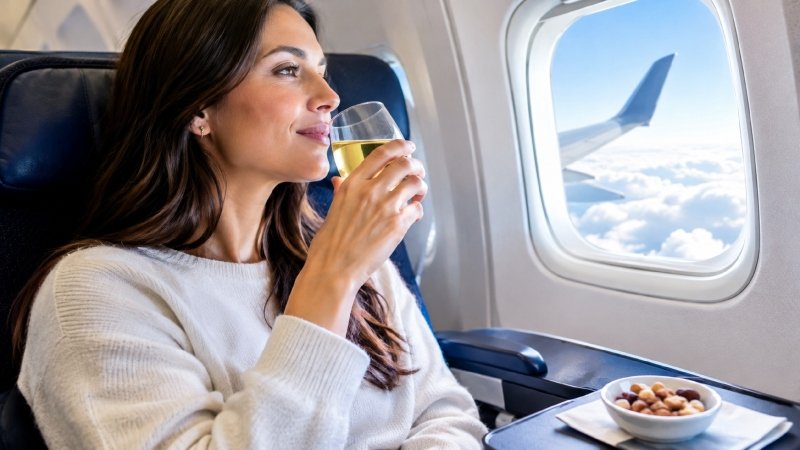
For many travellers, a drink on the plane is part of the ritual. A glass of wine with dinner, a cocktail to celebrate the start of a holiday, or a nightcap before trying to sleep on a long-haul flight can feel like a small luxury at the start of a trip. With the busy holiday travel season approaching, plenty of passengers will be ordering one at cruising altitude.
Research suggests it is worth thinking twice before combining alcohol and sleep in the air. A 2024 study published in the journal Thorax found that drinking and then sleeping in conditions similar to an airplane cabin noticeably lowered blood oxygen levels and raised heart rates. The findings matter for every kind of traveller, from families on holiday to business flyers to someone travelling to a coastal luxury rehab or other treatment program who wants the journey to support their health rather than work against it. Here is what the research found and how to fly smarter.
Why the Cabin Changes Things
Airplane cabins are pressurised, but not to sea level. On commercial flights, cabin pressure is typically maintained at the equivalent of about 8,000 feet, or roughly 2,438 metres, above sea level. At that altitude, the air contains less available oxygen, and the body’s blood oxygen saturation naturally drops a little.
For healthy people, that small drop usually goes unnoticed. The question researchers wanted to answer was what happens when alcohol and sleep are added to the mix.
What the 2024 Study Found
The study was led by Eva-Maria Elmenhorst of the Institute of Aerospace Medicine at the German Aerospace Center (DLR). Researchers compared young, healthy adults sleeping in a regular sleep laboratory with others sleeping in an altitude chamber that simulated cabin pressure on a long-haul flight. Participants slept with and without alcohol beforehand. The drinking was moderate, with an average blood alcohol concentration of about 0.043%.
The combination of alcohol and simulated cabin pressure lowered median blood oxygen saturation during sleep to about 85%, compared with about 88% at simulated altitude without alcohol and nearly 96% in the sleep lab without alcohol. Heart rate rose to a median of about 88 beats per minute, compared with about 73 at altitude without alcohol. Deep sleep was also reduced under the combined conditions.
In an interview with Euronews Health, Elmenhorst said the team expected oxygen levels to drop but was surprised by how strong the effect was. The DLR noted that the combination could put strain on the heart and may worsen pre-existing medical conditions.
Why It Matters for Some Travellers More Than Others
The participants were young and healthy, and the study was small, so researchers cautioned that more work is needed. However, people with heart or lung conditions may already have lower oxygen levels to begin with, which means a further drop could carry more risk. Anyone with such conditions should talk with their doctor before flying, especially on long-haul routes.
Smarter Ways to Fly
You do not need to give up every comfort on a flight to travel well. A few simple choices can help you arrive feeling better, especially on long journeys.
- Skip alcohol before sleeping on board. The study specifically found the strongest effects when alcohol was combined with sleep at simulated altitude. If you plan to sleep, choosing a nonalcoholic drink is the simplest step.
- Hydrate with water instead. Cabin air is dry, and alcohol increases urine production. Regular water throughout the flight can help you feel more comfortable when you land.
- Move when you can. Standing, stretching, and walking the aisle during long flights helps circulation and can make the trip feel shorter.
- Plan your sleep around the destination. Adjusting your rest to the local time zone, rather than using alcohol to knock yourself out, can make it easier to adapt to a new schedule.
- Talk to a doctor about health conditions. If you have a heart or lung condition, ask your doctor whether flying, alcohol, or both could pose risks and what precautions make sense.
These small changes can make a long-haul flight feel less like an endurance test and more like the start of a good trip.
When the Airport Bar Becomes a Habit
Travel often loosens routines. Airport lounges, duty-free shopping, and holiday celebrations can make drinking feel more normal than it is at home. For most people, that is a temporary change. For others, noticing that every trip revolves around drinks, or that it is hard to enjoy travel without alcohol, can be a useful signal to reflect on their habits.
If cutting back feels difficult, a conversation with a doctor can help. People who drink heavily every day should get medical advice before stopping suddenly, because alcohol withdrawal can be dangerous.
Travel Well, Arrive Well
A drink on a plane might feel like part of the holiday spirit, but the latest research suggests that alcohol and in-flight sleep are not an ideal pairing. Choosing water, moving around, and planning rest thoughtfully can help you land rested and ready to enjoy your destination. A good booking explains these conditions before departure instead of promising an itinerary that cannot be safely guaranteed.
Frequently Asked Questions (FAQs)
1. Is it safe to drink alcohol on a plane?
Many people drink on flights without problems, but a 2024 study in Thorax found that alcohol combined with sleep in simulated cabin conditions lowered blood oxygen and raised heart rate. People with heart or lung conditions should be especially cautious.
2. What altitude is an airplane cabin pressurised to?
Commercial airplane cabins are typically pressurised to the equivalent of about 8,000 feet, or roughly 2,438 metres, above sea level.
3. What should I drink on a long-haul flight?
Water is the simplest choice, since cabin air is dry. Nonalcoholic drinks are a good option if you plan to sleep, based on the 2024 study’s findings about alcohol and in-flight sleep.